 Pharmacy POS Software
The pharmacy industry is becoming increasingly technology-driven. From managing medicine inventory and processing customer bills to tracking expiry dates and maintaining purchase records, pharmacy owners handle several daily operations. Managing these activities manually can lead to billing errors, stock discrepancies, expired medicines and difficulties in maintaining accurate business records.
This is where Pharmacy POS Software becomes important. A Pharmacy Point of Sale (POS) system helps medical stores automate billing, manage inventory, track medicine sales and streamline everyday pharmacy operations through a single digital platform.
Whether you operate a small medical shop or a multi-branch pharmacy, choosing the right pharmacy POS software can help improve operational efficiency, customer service and business management.
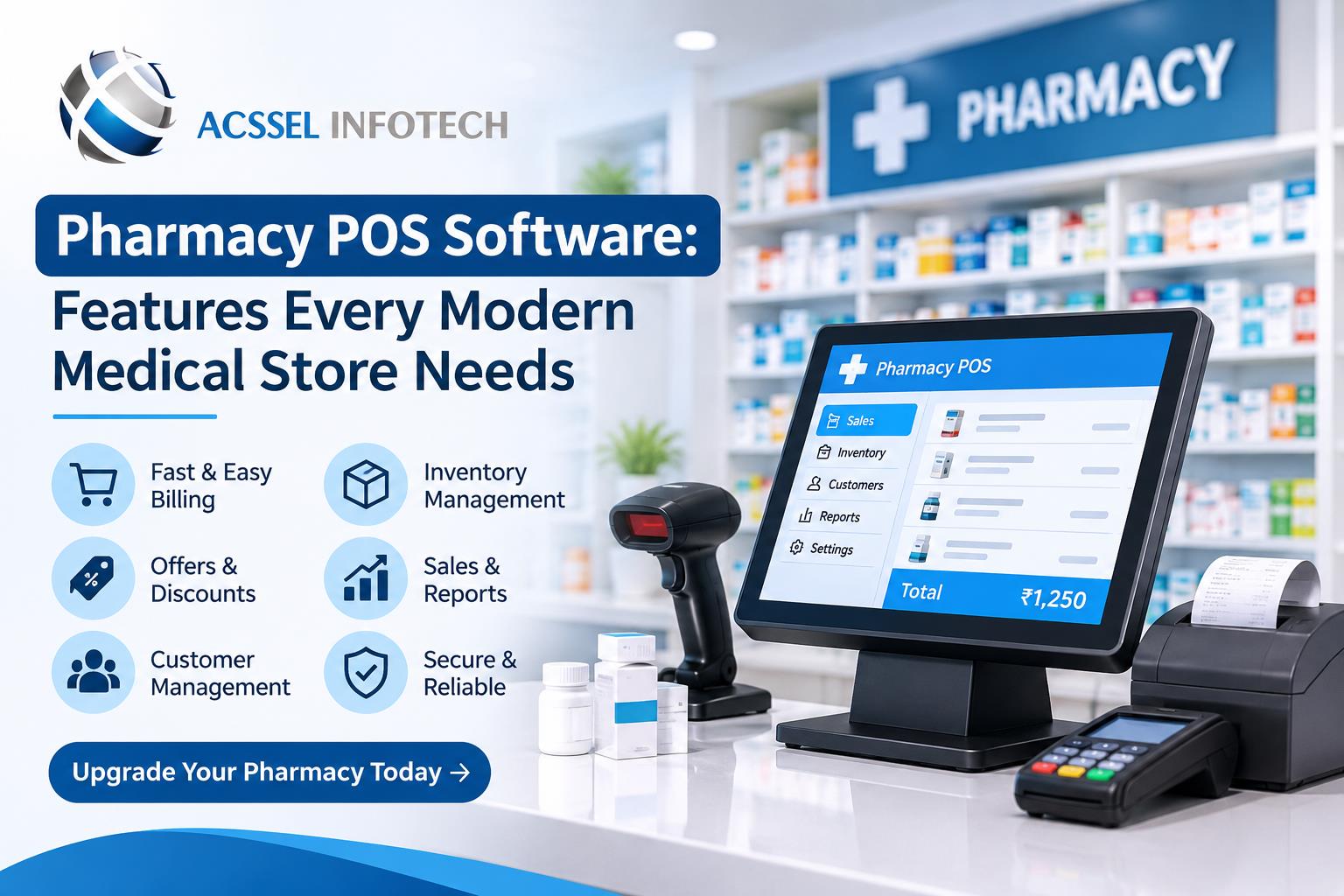
Pharmacy POS Software is a digital solution designed to manage billing and sales operations in medical stores and pharmacies. It allows pharmacy owners and employees to generate invoices, record transactions, manage medicine stock and monitor daily sales.
Unlike traditional billing systems, modern pharmacy POS solutions offer additional capabilities such as barcode scanning, batch number tracking, expiry date monitoring, supplier management and GST billing.
By connecting billing with inventory management, pharmacy POS software helps ensure that stock records are updated whenever medicines are sold or purchased.
Managing a pharmacy involves more than selling medicines. Owners must maintain accurate stock records, monitor medicine expiry dates, manage suppliers, calculate taxes and provide timely customer service.
Manual processes can become difficult as the number of products and daily transactions increases.
Pharmacy POS software helps address these challenges by centralising important business activities. It reduces repetitive data entry, improves billing accuracy and gives pharmacy owners better visibility into their business performance.
Billing is one of the most important daily activities in a pharmacy. A POS system should allow staff to generate invoices quickly and accurately.
Features such as barcode scanning, automatic price calculation, discount management and GST invoice generation can simplify the checkout process.
A faster billing process can also help reduce customer waiting time, especially during busy hours.
Inventory management is essential for maintaining the availability of medicines and avoiding unnecessary purchases.
Pharmacy POS software should automatically update stock quantities whenever a medicine is sold, returned or purchased.
This helps pharmacy owners monitor available stock, identify fast-moving products and make better purchasing decisions.
Medicines are supplied in different batches, and each batch may have a different manufacturing and expiry date.
Batch tracking helps pharmacies maintain product-level records and identify the specific batch associated with a transaction.
This information is particularly useful when managing medicine recalls, stock verification and expiry-related activities.
Selling expired medicines can create serious patient safety and regulatory concerns.
A pharmacy POS system should help track medicine expiry dates and generate alerts for products approaching their expiry.
This allows pharmacy staff to review stock in advance, follow appropriate return procedures and reduce avoidable inventory losses.
Accurate billing and tax records are important for pharmacy businesses.
Pharmacy POS software should support applicable GST calculations, tax classifications and invoice generation.
It can also help organise sales and purchase records, making it easier for pharmacy owners and accountants to review business transactions and prepare tax-related reports.
Manually entering medicine names and product details during every transaction can increase billing time and the possibility of errors.
Barcode scanning helps identify products quickly and retrieve their associated information.
This feature can improve billing efficiency and simplify inventory verification, particularly in pharmacies managing a large number of products.
Pharmacies regularly purchase medicines from distributors and suppliers.
A POS system should help maintain supplier details, record purchase invoices, monitor incoming stock and organise payment information.
Centralised purchase records make it easier to review supplier transactions and understand purchasing patterns.
Pharmacy owners need accurate information to understand how their business is performing.
A pharmacy POS system should provide reports covering daily sales, monthly revenue, product performance, purchase transactions and inventory status.
These reports help owners identify sales trends, monitor expenses and make more informed business decisions.
Maintaining customer information can help pharmacies provide more organised service.
Customer management features may include contact details, purchase history and transaction records.
With appropriate privacy safeguards and customer consent, pharmacies can also use digital communication for order updates and relevant service reminders.
Pharmacy businesses operating across multiple locations need a convenient way to monitor their operations.
Multi-branch POS software can help owners view sales, monitor stock and manage business information across different stores.
Centralised reporting can improve operational visibility and help management make consistent business decisions.
Implementing pharmacy POS software can offer several operational benefits.
Before selecting a pharmacy POS system, pharmacy owners should evaluate their business requirements and software capabilities.
Consider the following factors:
It is also important to understand the pricing structure, implementation requirements and availability of product updates before purchasing a solution.
Traditional billing systems generally focus on generating invoices and recording sales. A modern pharmacy POS solution can connect billing with inventory, purchases, batch tracking and business reporting.
This integration helps reduce manual work and provides a more complete view of pharmacy operations.
For growing medical stores, an integrated POS system can be a more practical approach than managing multiple disconnected tools.
Digital transformation is changing how pharmacies manage their daily operations. Pharmacy owners increasingly need technology that supports faster billing, accurate inventory records and organised business reporting.
Modern pharmacy software can also support online order management, digital payments, customer communication and integration with other business systems.
As pharmacy businesses expand, adopting scalable digital solutions can help them manage increasing operational complexity while maintaining service quality.
Pharmacy POS Software is an important technology solution for modern medical stores. From fast billing and GST management to medicine batch tracking, expiry monitoring and inventory control, the right system can simplify multiple pharmacy operations.
Before choosing a solution, pharmacy owners should evaluate their business requirements, essential features, usability, security and future scalability.
Acssel Infotech provides healthcare technology solutions designed to support digital operations across the healthcare industry. Explore Acssel's pharmacy software solutions to understand how technology can help streamline pharmacy billing, inventory management and everyday business activities.
Pharmacy POS Software is a digital system used to manage medicine billing, sales transactions, inventory, purchases and other pharmacy operations.
Essential features include GST billing, barcode scanning, inventory management, batch tracking, expiry alerts, supplier management and sales reporting.
Yes. Pharmacy POS systems with expiry management capabilities can record medicine expiry dates and generate alerts to help staff review products approaching expiry.
Yes. Small medical stores can use pharmacy POS software to simplify billing, maintain digital stock records and monitor daily sales.
Some pharmacy software solutions support multi-branch management, allowing owners to monitor stock, sales and business activities across different locations.
Many modern pharmacy POS systems support GST calculations and invoice generation. Pharmacy owners should verify that the software supports their applicable tax and invoicing requirements.
It can automatically update stock after sales and purchases, maintain batch records, monitor expiry dates and generate inventory reports.
Compare billing features, inventory capabilities, ease of use, data security, reporting, support services and pricing before making a decision.