 Making the Right Choice Between EHR and EMR
The world today has become more integrated, digitized, and patient-centered. Many clinics, hospitals, and even dental clinics have implemented various electronic solutions that contribute to better work performance and high-quality medical assistance. While navigating these changes, two terms come up repeatedly — EHR (Electronic Health Records) and EMR (Electronic Medical Records).
Many healthcare providers confuse these abbreviations, but learning the difference between EHR and EMR is highly beneficial for any healthcare organization.
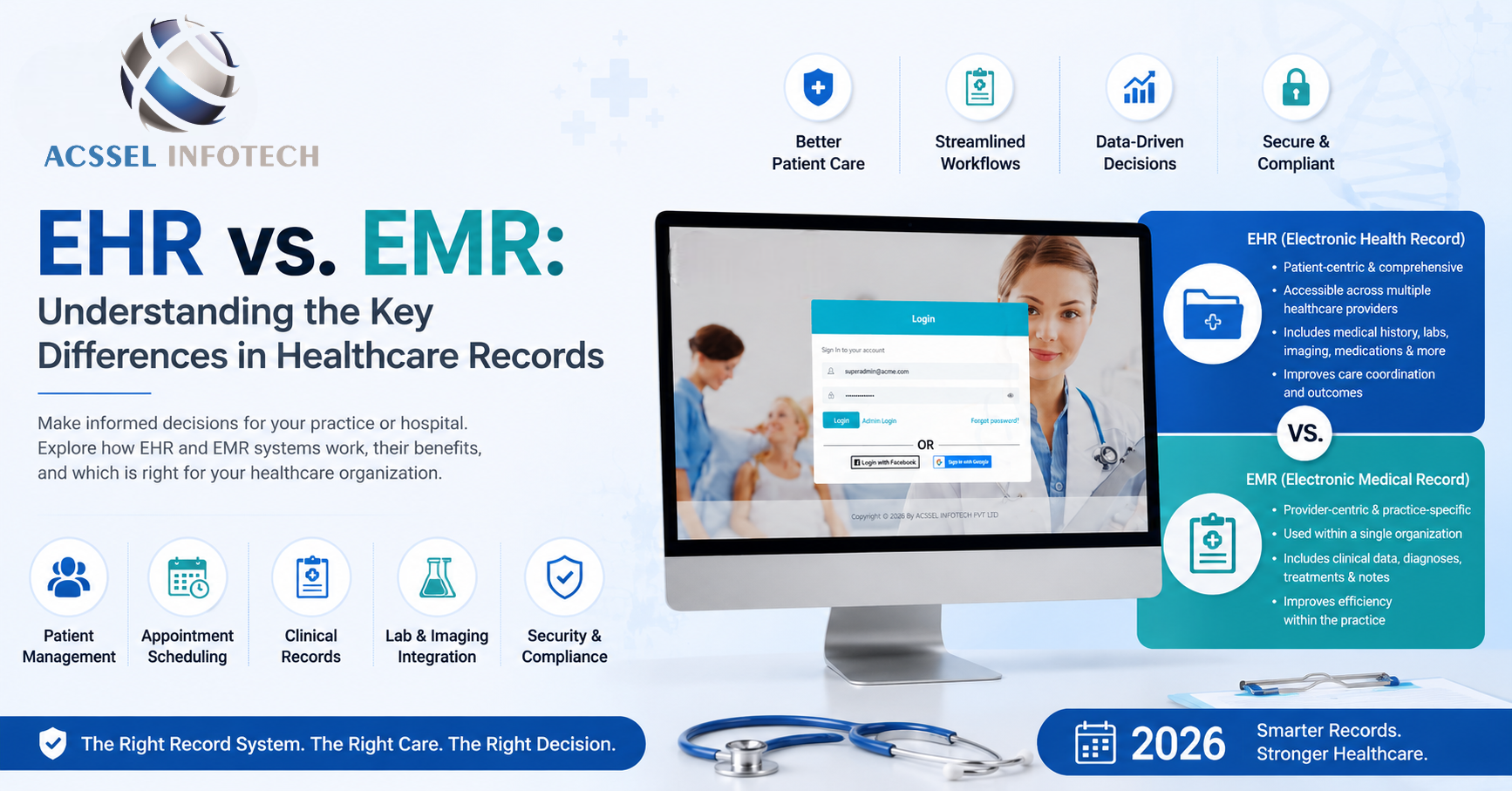
The choice of the right solution is vital since it can influence many aspects of operations and directly affect patient experience. Selecting appropriate software helps hospitals and clinics:
EMR stores information such as:
Access to this information is restricted to staff within that one organization.
Unlike EMR, an EHR creates a comprehensive digital record covering a patient's entire healthcare journey. This information is shared across multiple healthcare providers and organizations, enabling connected and coordinated care.
EHR stores:
EHR creates an opportunity for truly connected healthcare — ensuring patients receive better treatment no matter where they seek care.
| Feature | EMR | EHR |
|---|---|---|
| Definition | Digital chart within a single clinic | Comprehensive record shared across providers |
| Scope | Single organization | Entire healthcare journey |
| Data Sharing | Within one facility | Across healthcare organizations |
| Accessibility | Internal only | Network-wide |
| Collaboration | Within one provider | Across multiple organizations |
| Focus | Treatment at one hospital | Lifelong patient health journey |
| Purpose | Manage appointments within a facility | Provide connected care across all stages |
Similar to EHR and EMR, an Electronic Dental Record (EDR) allows dentists to create a detailed chart of a patient's condition. An EDR stores:
Large clinics and multi-location dental chains benefit greatly from EDRs, as they can easily monitor patients' health status across locations. With the advancement of modern technology, electronic dental records are set to become indispensable in the dentistry industry.
The NABH (National Accreditation Board for Hospitals & Healthcare Providers) aims to promote best quality practices in the healthcare sector. While not all clinics are required to follow these recommendations, using NABH-compliant software will be highly beneficial in the future.
Healthcare organizations seeking NABH accreditation typically need systems that support:
Using NABH-compliant software helps healthcare organizations prepare for accreditation and ensures they are already meeting the highest standards of care.
Today, healthcare organizations require modern digital solutions to improve their operations. EHR and EMR are both becoming increasingly popular — but selecting the right one depends on the specific needs of your clinic.
While EMR software helps manage information efficiently within a single facility, choosing EHR gives organizations new opportunities for connected, patient-centered care. Dental providers, too, will find great value in adopting electronic dental records going forward.
For those who want to improve performance and achieve organizational excellence, investing in an NABH-compliant EMR/EHR system is the right step forward.